
Three weeks. Six schools. Over a thousand students. I knew before I left that the Debate Mate International Programme in Nepal was going to be extraordinary, but I really had no idea how extraordinary it would be.
Debate Mate runs their international programme in collaboration with the Samata Shiksha Niketan schools, which deliver high-quality education to children who might otherwise not have any. Selected university mentors are sent out to Nepal where, with the support of programme directors, they deliver workshops built around debating skills, critical thinking and public speaking. Some students have taken part in the programme before and can debate to a very high standard. For others it is about finding their voice for the first time. This was the twelfth year of the programme, and the largest yet.
On 17th July, the mentors flew out to Nepal. Eight mentors from across the UK converged at Heathrow. We began to get to know each other and theorised what the next three weeks might look like. After a long trip with a layover in India, we finally arrived in Kathmandu. A city bursting with noise, a city that never seemed to sleep.
Week 1 – Kathmandu, Lalitpur and Gorkheshwar
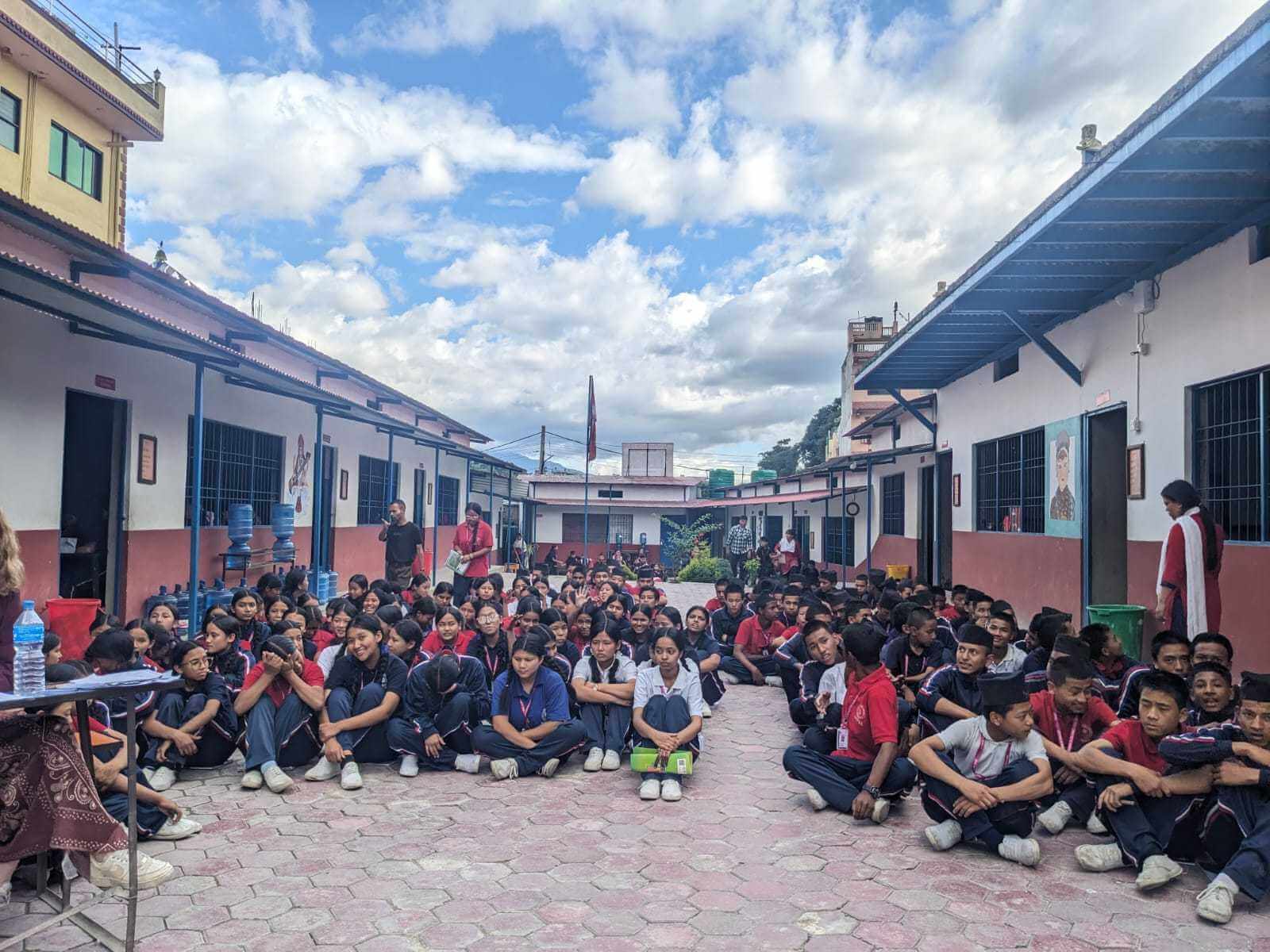
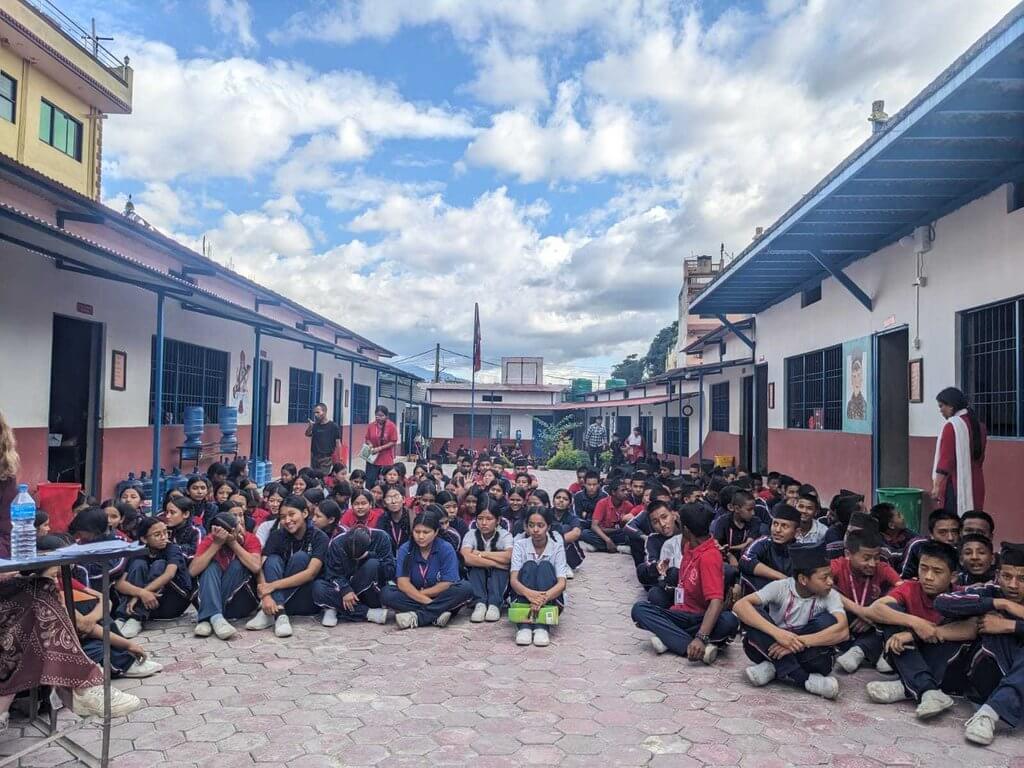
After a full day of training, we walked into the school and were met immediately by a flurry of excited students and teachers. Before teaching began, the students lined up in their classes and carried out perfectly synchronised movements called out by the headmaster. It was the first of many moments that made us aware that these children took school seriously.
When the headmaster introduced the mentors and programme directors on stage, the courtyard erupted.
Each mentor was assigned a group of students. Half of us, myself included, headed to a branch Samata school around forty minutes away. My first class in Lalitpur was a wide mix of ages. They were nervous, but respectful and polite in a way I noticed immediately. I would be lying if I said I was not nervous too. But they welcomed me.
After introductions, we brought our classes into the courtyard for a classic game of zip, zap, boing. It took some encouragement to convince them that they were, on this occasion, allowed to shout. But once they did, the laughter that followed told me we were going to have fun over the next few days.
In one of the Kathmandu classes, a student kicked off the balloon debate by declaring that he was Sudan Gurang, a famous Nepalese activist who led the youth protest movement against corruption. At that moment it became clear that these students already had their own voices. They just needed the tools to use them in a debating environment.
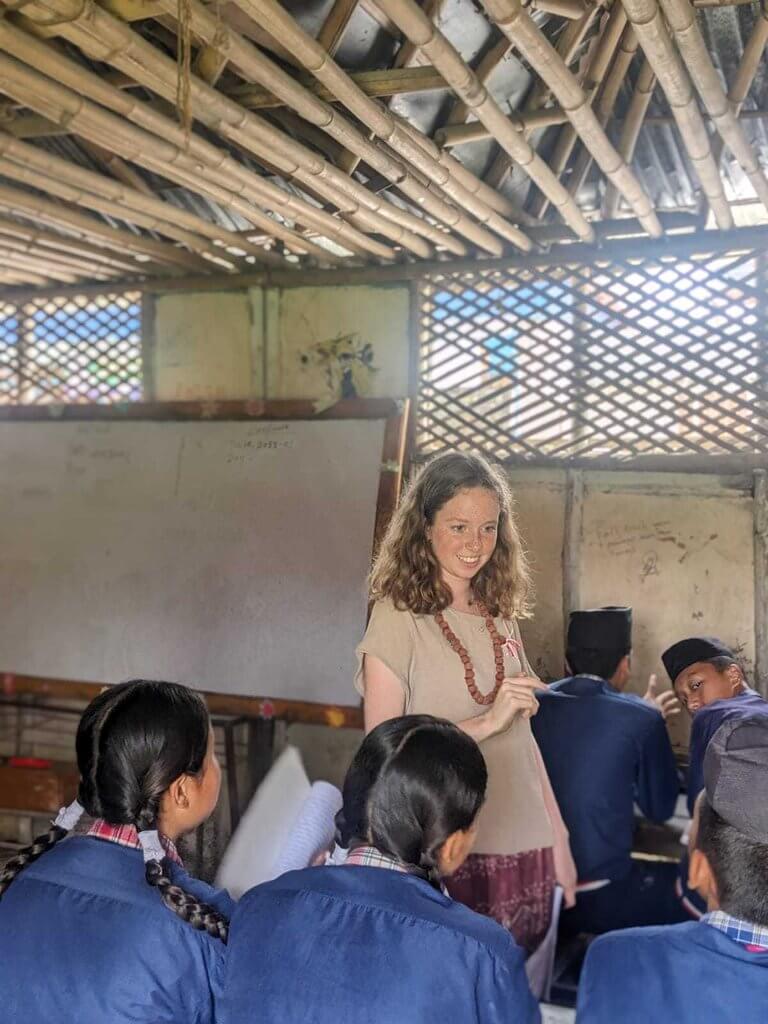
Over three days, we worked through the curriculum, and the students’ focus was impressive. By day three, they could recite all the stylistic techniques, explain what REEL stands for, and were already attempting rebuttal. They put all of these new skills into practice as we began mini debates. The speed at which they absorbed information was remarkable. Choosing the competition teams was the hardest part. My first team, the Avengers, were a mixed group of mostly new debaters. They were about to give their opposing teams a run for their money.
All the competitions ran smoothly, but Kathmandu saw a particularly fiery final. The returning team, The Warriors, whipped the spectators into a frenzy. I was lucky enough to be on the judging panel, and the standard of debating from students who weeks earlier had never attempted a formal argument was extraordinary.
After an intense but successful week of mentoring, we enjoyed Kathmandu for the weekend. We visited Durbar Square, explored the winding streets of Thamel and checked out the nightlife. It is a sensory-rich city with a remarkably vibrant culture, and it felt like a well-earned exhale before week two.
Week 2 – Bhaktapur and Kavrepalanchowk
We then travelled to Bhaktapur, a world heritage site about thirteen kilometres east of Kathmandu and a welcome change of pace. Where Kathmandu had noise and energy, Bhaktapur was quieter, older and full of beautifully preserved architecture. The team split again into morning and afternoon groups, one heading to the Samata school in Bhaktapur and the other making the drive up to the village school in Kavrepalanchowk. The road wound up and across the mountains, and the view from the window was the kind that makes you put your phone down, a perfect opportunity to reflect on the experience so far.
The Samata school in Kavrepalanchowk was smaller than the others, and for many of the students it was their first encounter with debate. But the mentors were now well into their stride. I was placed with the older students, ranging from 14 to 16, and their progress over just a few days was staggering. They arrived nervous and left passionate, particularly about the style side of the curriculum, which they took to immediately. From this class emerged Blue Lock, our only all-girls team, and watching them work together to find their confidence over those few days was one of the most special moments of the trip for me.
In between teaching days, we explored the city, a highlight being the pottery class we all took part in. The workshop was run by some incredibly skilled (and very patient) experts who guided us through making our own crafts. We were told pottery making in Bhaktapur dates back over a thousand years, which, given the craftsmanship on display, was easy to believe.
Competition morning arrived, and the school was already buzzing when we walked in. The headteacher told us the students had been there since early morning. The final was fierce; the teams spoke with a conviction that silenced the room. When Blue Lock took the win, I felt a wave of emotion. As the first cohort of all-female mentors, watching an all-girls team captivate the room and walk away with the trophy meant more than I expected.
With competitions wrapped up in both schools, we headed back to Kathmandu, and as it happened, back in time for Crystal’s 20th birthday celebrations. In true Nepalese monsoon style, the city greeted us with torrential rain, so heavy we ended up genuinely trapped on the rooftop of Tom and Jerry’s bar, a familiar Debate Mate haunt
with signed tote bags on the walls dating back to 2012. It felt like exactly the right way to end week two.
Week 3 – Pokhara
Bright and early the next day we set off along the Prithvi Highway, which spans about 200 kilometres along rushing rivers, rural villages and breathtaking hillsides. It was a beautiful but bumpy ride that took us around nine hours. Pokhara itself is a laid-back lakeside city, with the Annapurna mountain range sitting behind it like a backdrop that does not look entirely real.
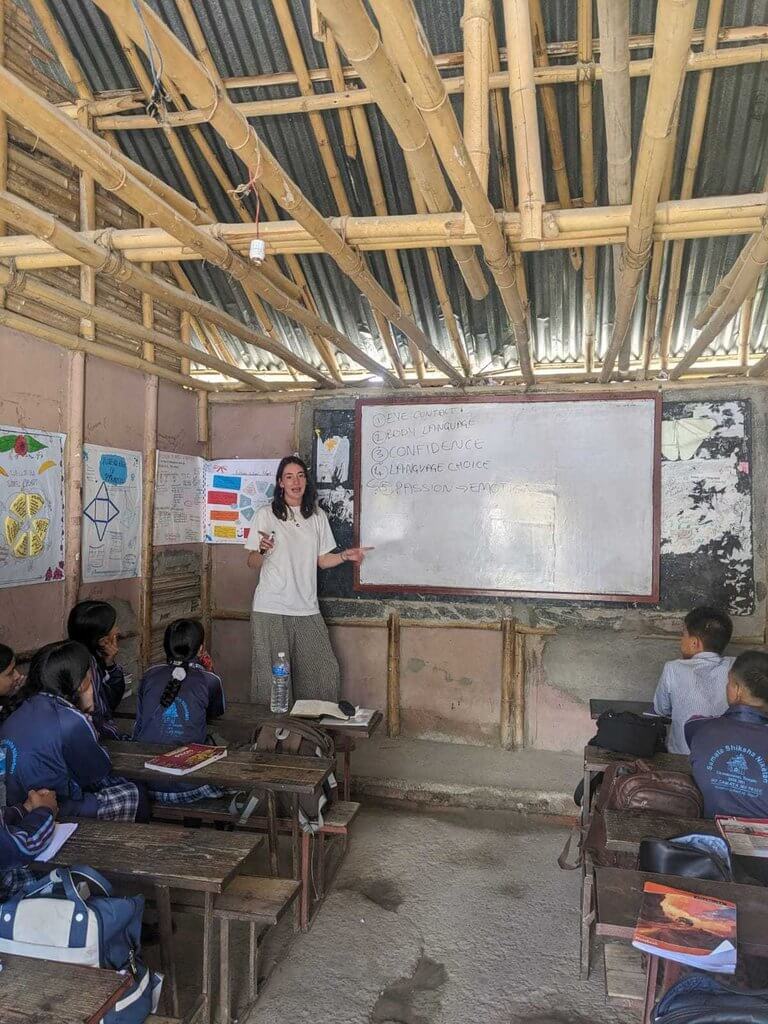
For the first time on the trip, the whole team taught in the same location, which gave the final week a different energy. We could see everyone in action for the first time. The Pokhara students arrived confident and vocal from the start. Where Do You Stand and the balloon debate produced animated, thoughtful responses. One minute debating Ronaldo vs Messi, the next interrogating whether cars should be banned in the city.
Pokhara felt different, in all the right ways. By this point, all the mentors had found their stride and the students’ energy matched it. Competition day produced some of the highest standard debating of the trip, even from the youngest students. The two finalists, Mount Annapurna and Elite Everest, pushed each other to the wire, with Elite Everest taking the win by just two points.
After the competition, the school served the mentors Nepalese specialty tea, and we ended the day with an enormous round of Granny’s Footsteps with the students, a game that proved extremely popular with the Nepalese school kids!
As a team, we made the most of Pokhara. Some mentors went kayaking; others took on the white-water rafting down the Upper Seti River, which was certainly one way to build team spirit. We stayed in a social hostel with a pool table and befriended a group of Nepalese locals who took us to a hidden waterfall and live-music bars that felt far off the tourist trail. As the trip began to wind down, it felt like exactly the right place to be doing it.
We travelled back up the bumpy Prithvi Highway to our familiar Kathmandu hostel, Elbrus Homes, greeted as always by an enthusiastic Kem, the hostel owner who seemed delighted to have the Debate Mate team back under his roof.
National Final Day
The winning teams from Pokhara, Kathmandu, Kavrepalanchowk, Gorkheshwar and Bhaktapur arrived at the Kathmandu school, and the energy was unlike anything we had felt in the previous weeks. Mentors reunited with their students, headteachers gathered, and for the first time, the whole programme came together in one place.
Sushil, the Kathmandu headmaster, opened the competition. Dale made a speech. And then the debating began. The standard was the highest we had seen, with REELs, POIs and stylistic techniques that would not have looked out of place in a university competition.
The final motion was ‘This house believes that the Gen Z protests have done more harm than good in Nepal.’ To understand why this landed the way it did, it is crucial to know that less than a year earlier, in September 2025, Nepal’s own Gen Z revolution saw mass anti- corruption protests that collapsed the government and triggered a historic political shift.
These students were not debating an abstract motion. They debated their own recent history, and the personal anecdotes they brought to the stage had the audience hooked.
The judges were torn. A lengthy, tense judging meeting followed. Kathmandu took the cup by two points, and the contrast between the winners’ elation and their opponents’ disappointment was bittersweet to watch.
To close the 2026 programme, the students put on a talent show, dancing and singing with music blasting across the courtyard. The children decorated our hands with henna and pulled every mentor onto the dancefloor. More than a few mentors had teary eyes. We piled into the minibus for the last time, exhausted, emotional and proud.
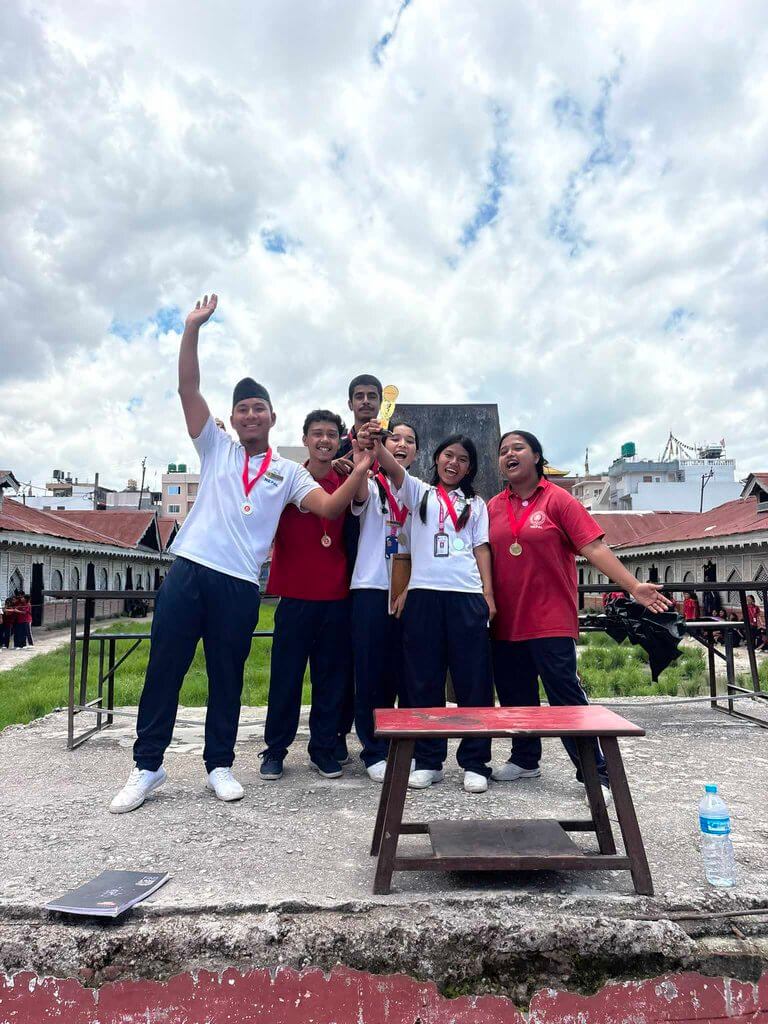
The programme Debate Mate runs in Nepal changes lives.
It gives children the chance to find their voice, take on new perspectives, and engage with the world around them with confidence. But it has also changed mine, and I know every mentor on this trip would say the same. The work ethic and the warmth these students showed us are something I will carry with me for a long time.
Before finishing, it would feel wrong not to acknowledge the devastating flash floods that have recently struck Nepal. The regions we travelled through were not directly affected, and we have been in contact with the Samata schools to confirm that all the children are accounted for. But the impact on the country as a whole will be profound.
You can find a link to donate to the relief fund below:
Nepal contributes less than 0.1% of global greenhouse gas emissions and yet it is already bearing the
consequences of a crisis it did little to create. It is a truly extraordinary country, with people who take genuine care of each other, their community and their land. They deserve better than this.
